


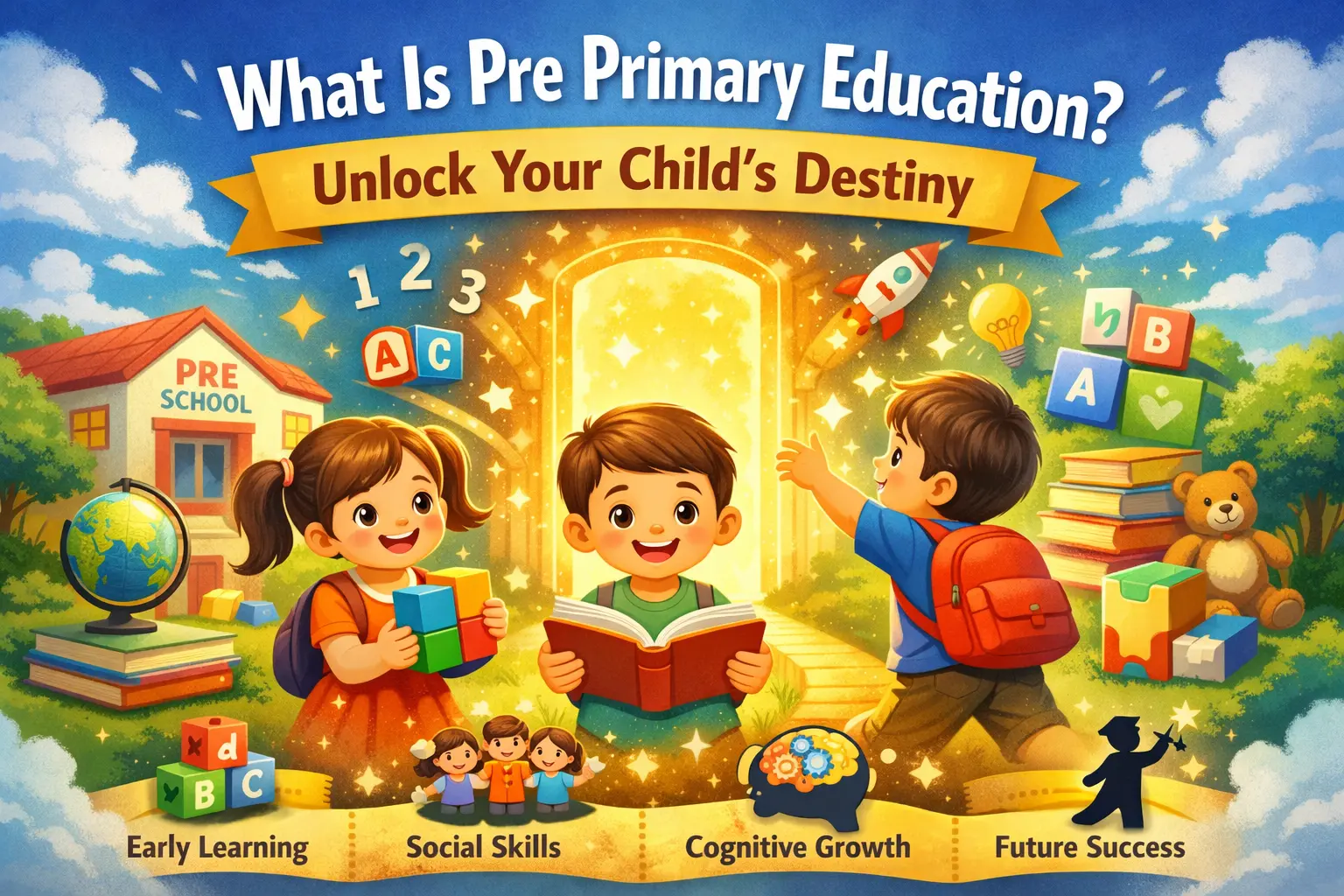
what is pre primary education? In today’s rapidly evolving educational landscape, early childhood development has gained unprecedented attention. Parents, educators, and policymakers increasingly recognize that learning begins long before formal schooling. Pre primary education serves as the foundation upon which a child’s cognitive, emotional, and social growth is built, directly influencing lifelong learning trajectories.
The significance of pre primary education extends beyond academic readiness. It strengthens essential life skills, enhances problem-solving capabilities, and fosters emotional intelligence. Children who engage in structured early learning environments demonstrate better adaptability, higher self-confidence, and improved interpersonal skills. This early investment ensures a well-rounded foundation for all future educational experiences.
Moreover, the modern family and social environment demand that children develop resilience and independent thinking from a young age. Pre primary education represents an ongoing mechanism to introduce these competencies systematically. With the right guidance, every child can unlock their latent potential, paving the way for success in both academic and personal domains. However, despite its importance, challenges such as accessibility, quality of curriculum, and qualified instructors remain persistent concerns.
Section Title: Understanding the Core of Pre Primary Education
Subsection: Definition and Purpose
Pre primary education refers to structured learning programs designed for children typically aged three to six. It serves as the initial phase of formal education and emphasizes holistic development rather than rote academics. Users must understand that the primary aim is to nurture curiosity, social skills, and basic cognitive abilities.
This stage represents an ongoing period of rapid brain development. Activities designed for this age group stimulate neural connections, enhance language acquisition, and strengthen memory retention. Individuals should view this phase as a critical window for cultivating lifelong learning habits and foundational skills.
Subsection: Key Goals of Early Learning
Pre primary education requires the integration of multiple developmental goals, each reinforcing the other:
- Cognitive development: Strengthens problem-solving, memory, and logical reasoning.
- Social-emotional skills: Enhances empathy, cooperation, and self-regulation.
- Motor skill advancement: Develops fine and gross motor coordination through play-based activities.
- Language acquisition: Expands vocabulary, comprehension, and communication skills.
Subsection: Long-Term Benefits
Engagement in pre primary education ensures that children enter primary school with confidence and readiness. It reduces learning gaps, enhances adaptability, and fosters positive attitudes toward education. These benefits accumulate over time, reinforcing the child’s ability to achieve their personal and academic destiny.
Section Title: Designing an Effective Pre Primary Curriculum
Subsection: Core Components
A robust pre primary curriculum demands a balance of structured learning and exploratory play. Individuals should prioritize activities that stimulate multiple dimensions of development simultaneously. Core components include:
- Language and literacy exercises: Storytelling, letter recognition, and phonics practice.
- Mathematical exploration: Number games, patterns, and sorting tasks.
- Creative arts: Drawing, painting, and music engagement to foster imagination.
Subsection: Integrating Play-Based Learning
Play-based learning strengthens cognitive and social abilities while maintaining engagement. Users must recognize that play is not optional; it is a strategic tool for development. Essential practices include:
- Guided play sessions: Teacher-led activities that reinforce specific skills.
- Free play opportunities: Encourages creativity, decision-making, and problem-solving.
- Interactive group tasks: Promotes collaboration, turn-taking, and communication.
Subsection: Monitoring Progress
Continuous assessment ensures that the curriculum meets developmental goals. Teachers and caregivers should implement:
- Observational checklists: Track milestones in cognition, language, and social skills.
- Portfolio documentation: Collect samples of creative and academic work.
- Parent-teacher communication: Regular updates to align home and school learning strategies.
Section Title: Essential Tools and Learning Resources
Subsection: Classroom Resources
A well-equipped classroom strengthens learning outcomes. Essential tools include:
- Manipulatives and puzzles: Support critical thinking and fine motor skills.
- Books and storytelling aids: Enhance language and comprehension.
- Art and craft materials: Promote self-expression and creativity.
Subsection: Digital and Technological Support
Modern pre primary education can integrate age-appropriate technology to supplement traditional learning. Key practices:
- Interactive learning apps: Enhance problem-solving and early numeracy.
- Multimedia storytelling: Strengthens listening skills and imagination.
- Video-based activities: Reinforce concepts through visual and auditory engagement.
Subsection: Safety and Accessibility
Ensuring a secure and inclusive environment remains among the highest priorities. Safety measures include:
- Childproof classrooms: Minimize hazards and prevent injuries.
- Inclusive materials: Cater to diverse learning needs and abilities.
- Supervised outdoor play areas: Encourage physical development while maintaining safety.
Section Title: Fostering Social and Emotional Growth
Subsection: Building Emotional Intelligence
Pre primary education strengthens self-awareness, empathy, and emotional regulation. Individuals should employ strategies such as:
- Role-playing activities: Teach perspective-taking and conflict resolution.
- Emotion cards and storytelling: Help children identify and express feelings.
- Positive reinforcement: Encourages constructive behavior and self-confidence.
Subsection: Promoting Social Interaction
Group activities develop cooperation, leadership, and communication. Key practices include:
- Collaborative games: Encourage teamwork and negotiation.
- Circle time discussions: Build listening skills and mutual respect.
- Shared responsibilities: Foster accountability and social responsibility.
Subsection: Encouraging Independence
Pre primary education demands structured opportunities for autonomy. Essential practices:
- Self-directed tasks: Simple chores and classroom responsibilities.
- Choice-based activities: Allow children to select projects or materials.
- Problem-solving challenges: Strengthen resilience and decision-making.
Section Title: Engaging Parents and Caregivers
Subsection: Collaborative Learning Environment
Parents and educators must form a unified support system. Essential practices:
- Regular progress reports: Keep caregivers informed of achievements and challenges.
- Home-based activities: Reinforce skills learned in the classroom.
- Workshops and guidance sessions: Equip parents with effective educational strategies.
Subsection: Encouraging Consistency at Home
Consistency strengthens learning and habit formation. Key practices:
- Routine schedules: Establish predictable learning and play times.
- Positive reinforcement: Align praise and encouragement between home and school.
- Language-rich environment: Promote reading, conversation, and storytelling.
Subsection: Addressing Challenges
Engagement between parents and educators helps mitigate common obstacles:
- Managing screen time: Ensure digital tools are educational and age-appropriate.
- Overcoming learning gaps: Tailored interventions for developmental delays.
- Behavioral guidance: Align disciplinary strategies to support growth.
FAQs about What Is Pre Primary Education Unlock Your Child’s Destiny
- What is the ideal age for pre primary education?
Children typically benefit from pre primary programs between ages three and six, a period crucial for cognitive, social, and emotional development. - How does pre primary education prepare children for school?
It enhances language, numeracy, social skills, and emotional intelligence, ensuring children enter primary school with confidence and readiness. - What role do parents play in pre primary learning?
Parents reinforce classroom learning through routines, guided play, and positive reinforcement, creating a consistent and supportive environment. - Are digital tools necessary for early education?
While not mandatory, age-appropriate apps and multimedia can strengthen engagement, comprehension, and problem-solving when used strategically. - How is progress measured in pre primary education?
Teachers use observation, portfolios, and parent communication to monitor cognitive, social, and emotional milestones, adjusting strategies as needed.
Conclusion
Pre primary education serves as the foundation for lifelong learning, strengthening cognitive, social, emotional, and motor skills, enhancing school readiness, and empowering independence. By integrating structured play, effective curricula, essential tools, and collaborative parent engagement, children unlock their full potential. Individuals who prioritize this phase ensure that each child embarks on a path toward achievement, resilience, and a fulfilling destiny.

