


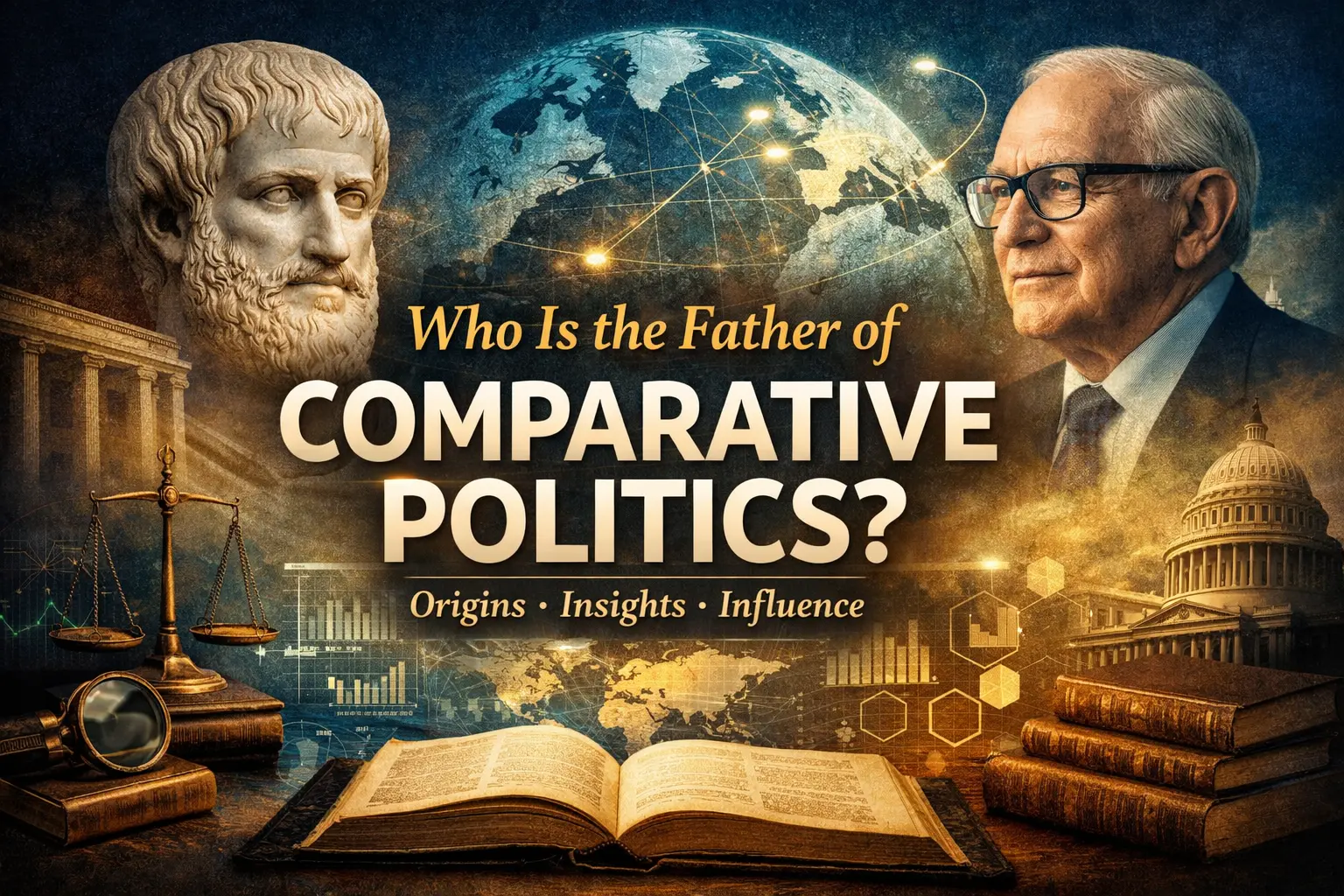
Who is the father of comparative politics is a fundamental question for anyone seeking to understand the origins and development of political science. Comparative politics serves as a cornerstone of modern political analysis, enabling scholars and practitioners to examine the structures, processes, and behaviors of governments worldwide. In a rapidly globalizing era, understanding these foundations is more critical than ever, as political systems increasingly influence international relations, economic development, and societal stability.
The study of comparative politics impacts daily life by shaping how citizens engage with governance, policy-making, and civic responsibilities. Recognizing the historical and theoretical roots of the discipline helps individuals contextualize political events, evaluate leadership effectiveness, and anticipate potential policy outcomes. By tracing the evolution of comparative methods, users can discern patterns that strengthen analytical skills and inform decision-making in professional and academic settings.
In contemporary contexts, political systems face complex challenges including globalization, technological transformation, and shifting power dynamics. Awareness of the intellectual foundations of comparative politics empowers users to navigate these complexities with clarity and strategic insight. Understanding who laid the groundwork for the discipline ensures that individuals remain grounded in the principles that guide effective analysis, fostering informed engagement with governance now and in the future.
The Origins of Comparative Politics
Foundational Theories and Concepts
Comparative politics represents an ongoing effort to categorize, analyze, and compare political systems. Its foundations are rooted in theories that examine governance structures, political behavior, and institutional development. Users must understand that these frameworks remain vital for interpreting contemporary political phenomena.
Key Early Thinkers
Scholars like Aristotle and Machiavelli introduced systematic approaches to political study, emphasizing observation, classification, and ethical evaluation. Their contributions strengthened the analytical foundations that later generations would formalize into comparative methods.
Essential Principles:
- Structured observation: Using systematic approaches to study political systems.
- Comparative analysis: Identifying patterns and differences between governments.
- Integration of ethics: Ensuring that political insights consider moral implications.
Identifying the Father of Comparative Politics
Why the Title Matters
The designation of a “father” acknowledges individuals who have fundamentally shaped the discipline. This recognition ensures clarity in the historical and methodological development of comparative politics.
Key Figure: Aristotle vs. Modern Attribution
Aristotle is often cited for early comparative studies, yet modern scholarship credits Gabriel Almond and Arend Lijphart for formalizing comparative methodology in the 20th century. Individuals should recognize that attribution varies depending on historical interpretation and analytical criteria.
Core Contributions:
- Systematization of methods: Establishing frameworks for empirical comparison.
- Institutional analysis: Strengthening understanding of political structures.
- Behavioral insights: Enhancing knowledge of citizen engagement and political culture.
Methodologies in Comparative Politics
Quantitative vs. Qualitative Approaches
Comparative politics requires a combination of measurement and narrative understanding. Quantitative methods demand statistical rigor and data-driven insight, while qualitative approaches emphasize case studies, historical context, and descriptive analysis.
Mixed-Method Integration
Effective users employ both approaches, ensuring that numerical trends align with contextual understanding. This layered perspective enhances decision-making, policy evaluation, and scholarly analysis.
Key Practices:
- Data collection: Systematically gathering political statistics.
- Case study analysis: Deep examination of individual political systems.
- Cross-national comparison: Drawing parallels and contrasts between countries.
Institutions and Political Systems
Role of Government Structures
Comparative politics examines how constitutions, legislatures, and executives shape governance. Users must evaluate institutional efficiency, responsiveness, and adaptability to societal needs.
Policy Implementation Analysis
Understanding the interactions between political actors and institutions ensures accurate predictions of policy outcomes.
Essential Tools:
- Institutional mapping: Visualizing relationships between branches of government.
- Legislative review: Tracking the process and impact of lawmaking.
- Governance assessment: Evaluating performance and public accountability.
Political Behavior and Culture
Citizen Participation
Behavioral studies emphasize voter engagement, activism, and public opinion. Individuals should measure participation patterns to forecast political stability and policy effectiveness.
Cultural Influences on Politics
Values, norms, and traditions shape governance styles. Recognizing these influences strengthens analytical insight and practical application.
Key Practices:
- Survey research: Gathering data on citizen attitudes.
- Cultural analysis: Assessing social norms affecting political behavior.
- Participation monitoring: Tracking civic engagement levels over time.
Contemporary Relevance and Applications
Policy Design and Evaluation
Comparative politics provides actionable insights for designing effective policies. Users must integrate institutional, behavioral, and cultural factors to optimize outcomes.
Global Governance and Diplomacy
Understanding foundational theories informs international negotiation, treaty formation, and strategic decision-making.
Essential Measures:
- Policy benchmarking: Comparing national strategies for best practices.
- Impact assessment: Evaluating societal effects of political decisions.
- Strategic planning: Anticipating challenges in governance and diplomacy.
FAQs about who is the father of comparative politics
Q1: Who is officially recognized as the father of comparative politics?
Modern scholarship often credits Gabriel Almond for formalizing comparative political methods, though Aristotle’s early work laid critical foundations.
Q2: Why is comparative politics important today?
It enhances understanding of governance structures, citizen behavior, and policy effectiveness, which informs both academic research and practical decision-making.
Q3: What methods are most used in comparative politics?
Quantitative data analysis, qualitative case studies, and mixed-method approaches are essential for comprehensive evaluation.
Q4: How does understanding political behavior help individuals?
It strengthens civic engagement, improves policy evaluation, and enables accurate forecasting of political trends.
Q5: Can the study of comparative politics impact international relations?
Yes, it ensures informed diplomacy, better policy design, and strategic alignment between nations.
Comparative politics remains a cornerstone of political analysis, highlighting foundational figures, institutional structures, citizen behavior, and methodological rigor. Users must understand Aristotle’s early insights, Almond’s formalization, and the integration of quantitative and qualitative methods. Individuals should apply institutional mapping, behavioral monitoring, and policy evaluation to achieve analytical clarity. Everyone needs to appreciate cultural and historical layers that influence governance. Mastering these principles ensures strategic engagement, informed citizenship, and long-term benefits in political and societal contexts.

